Where Nature
Meets Home
Warm whites, soft taupes, muted greens, and light timber tones — New Zealand interiors are turning inward, drawing from the landscape just beyond the window.
"NZ homes are finally listening to the land — bringing in the palette of our forests, beaches, and riverbeds, and letting nature dictate the conversation indoors."
The Palette of Aotearoa
There's a shift happening in New Zealand homes. It's quiet, unhurried — much like the design sensibility itself. Where once interiors chased Scandi whites or moody darks, today's Kiwi home is turning to something closer to its own backyard. Warm whites that echo pohutukawa bark. Muted greens that mirror native scrub. Soft taupes lifted from a Canterbury riverbed on a still morning.
This is not a trend borrowed from elsewhere. It is a reclaiming — of land, of material, of a distinctly New Zealand way of living. And furniture is at its heart.
Light timber frames with visible grain, upholstery in oatmeal bouclé, linen drapes that pool gently on floorboards — each piece tells a quiet story of place. The overall effect is a home that feels unhurried, grounded, and deeply liveable.
Timber as Soul Material
If there is one material that defines this moment, it is timber — specifically, light-toned native and sustainable wood with grain that is meant to be seen, touched, and talked about. Rimu, pine, and oak pieces are being left raw and lightly oiled rather than stained or lacquered into oblivion.
The visible grain is the point. It carries the fingerprint of the tree — and in an era of mass-produced homogeneity, that imperfection is precious. Furniture buyers are actively seeking one-off pieces, NZ-made joinery, and artisan collections where no two items are identical.
Round edges are everywhere. The hard-cornered, clinical furniture of the early 2010s has been replaced by pieces with organic forms — rounded dining tables, gently curved bed frames, soft-shouldered sideboards. The effect is a room that feels less curated and more grown.
The Materials Leading the Movement
Oak, pine, and rimu with visible grain — lightly oiled, raw-edged, and proudly imperfect. The grain IS the design.
Textural, tactile upholstery in oatmeal, cream, and warm grey. Fabrics you want to touch before you sit.
Honed travertine, matte ceramic, and unpolished concrete surfaces that add depth without drama.
Woven natural fibre in chairs, pendants, and side tables — bringing warmth and artisan craft to every corner.
Jute, sisal, and wool flatweaves anchor a space in texture — defining zones without disrupting the calm palette.
From walls to furniture, gloss is out. Chalky, hand-applied, matte surfaces absorb light rather than reflect it.
Muted Green is the
New Neutral
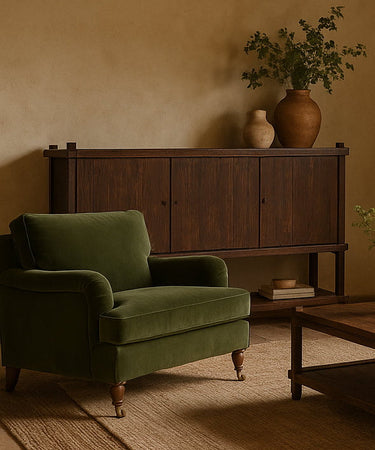
Forget the vibrant emeralds and deep teals of seasons past. The green that matters right now is quieter — a sage, a lichen, a moss that sits on the wall or sofa as if it always belonged there. These are greens that don't demand attention. They give it. They ask the room to settle, breathe, and feel connected to something beyond its four walls.
Used as an accent in upholstery, or as a full wall treatment behind a timber bed frame, muted green anchors the warm neutral palette with a note of vitality — alive without being loud.
How to Layer This Trend
The nature-inspired palette is not a formula — it is a sensibility. It asks you to slow down and consider each object in the room as a material decision. Does this fabric add warmth? Does this timber piece bring life? Does the room feel like somewhere you actually want to be at 7pm on a weekday?
The most common mistake is going too pale. Layering three tones of off-white creates a room that reads as sterile rather than serene. The secret is contrast — a deep bark cushion against a linen sofa, a moss green throw on a sand-coloured armchair, a walnut shelf against a warm white wall. The palette moves, but always within the same key.
6 Ways to Bring It Home
Start with Timber
A light oak or pine dining table is the fastest way to anchor the palette. Choose one with visible grain and rounded legs — avoid overly processed, glossy finishes.
Invest in One Textural Sofa
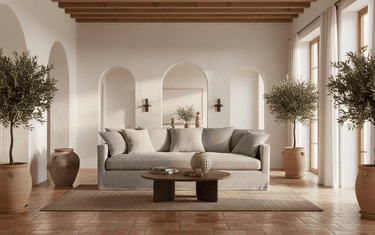
A bouclé or performance linen sofa in oatmeal, cream, or warm grey becomes the centrepiece of the room. Round arms and low profiles add to the organic feel.
Add Contrast with Dark Accents
A single bark or earth-toned piece — a side table, vase, or lamp base — stops the room from reading as monochrome. Depth is everything.
Layer Your Greens
Mix sage with moss. A sage linen cushion beside a muted green plant in a terracotta pot creates a layered, living quality that reads as intentional and natural.
Rugs Tie the Room Together
A natural jute or wool rug in cream or warm grey grounds the furniture and softens hard floors. Go larger than you think — rugs under all furniture legs, always.
Let Plants Do the Heavy Lifting
A large indoor plant — a fiddle leaf, olive tree, or kentia palm — adds a vertical element and living green that no cushion or curtain can replicate.
Why This Trend Feels Native to New Zealand
This is not a trend arriving from abroad and being adapted to NZ homes. It is a trend that New Zealand is, in many ways, leading. The connection to natural materials, the respect for local craft, and the proximity to extraordinary landscape all make this sensibility feel less like a fashion choice and more like a natural evolution.
Kiwi designers and furniture makers are responding — producing pieces that reflect their environment, using sustainably sourced local timbers, and prioritising longevity over novelty. The result is a market that is maturing: buying less, buying intentionally, and buying with a sense of place.
colour palette in NZ 2026
natural material upholstery
furniture demand YoY
Find Your Natural
Living Space
Browse our curated collection of nature-inspired furniture, light timber pieces, and tactile textiles — all selected to bring the outside in.
Explore the Collection